
🏊
Caroline
Started the Marathon Plan
Recently
Training matched to the swimmer
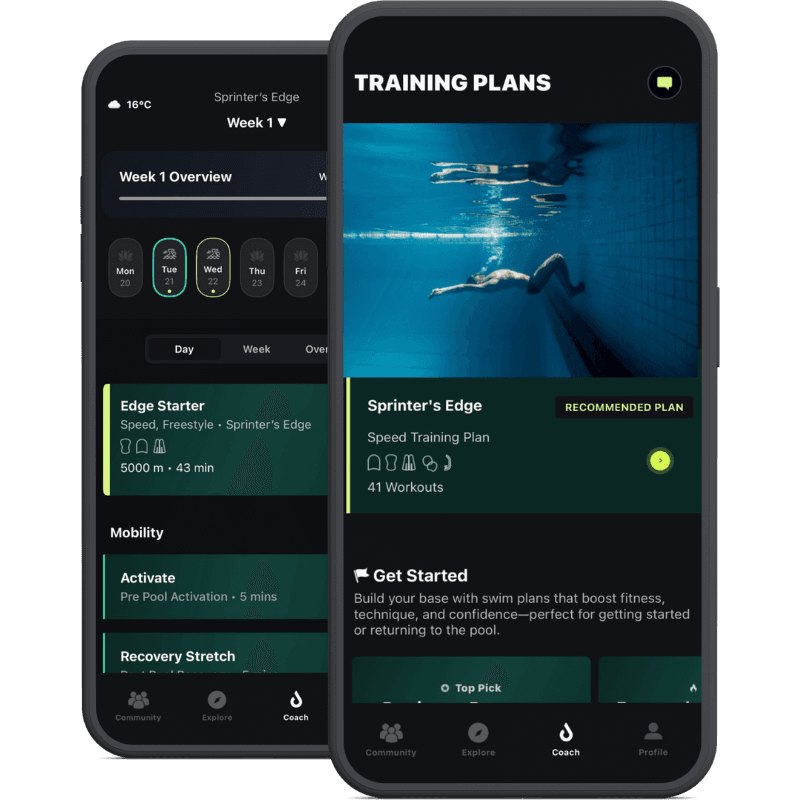
A useful personalised swim plan should reflect your goal, current ability, pace, and pool length, then organise workouts into a progression you can complete. DuoSwim uses those inputs to help select and shape your training, with AI-assisted guidance in the app. It is a planning tool, not a replacement for an in-person coach who can observe your stroke.
Start from a defined goal instead of a disconnected collection of workouts.
Use current pace, swimming level, and pool length to make sessions more relevant.
Change direction when your goal changes rather than forcing an unsuitable plan.
Personalisation is more than placing your name above a standard programme. The plan should begin with the outcome you want, such as learning freestyle, building endurance, improving race pace, preparing for a triathlon, or using swimming for fitness.
It should also account for your current swimming level, representative pace, and the length of the pool you use. Those inputs affect the difficulty and practicality of each workout. A plan that ignores them may prescribe the right theme but the wrong execution.
A generic plan can work well when its assumptions match you. It is easy to inspect and follow, but you have to decide whether the volume, pacing, and progression are appropriate. AI-assisted setup can reduce that selection work by using your inputs to recommend a more relevant path and present the next workout in context.
Neither approach can see how you move in the water. If pain, injury, major technique limitations, or an important performance goal changes what is safe or effective, work with a qualified coach or healthcare professional. App guidance is most useful for organising repeatable training between those higher-touch decisions.
Do not judge a plan from one fast or difficult swim. Look for several weeks of evidence: whether you can complete the intended main sets, whether pace is becoming more repeatable, and whether technique stays controlled later in the session.
If every key workout ends in missed repeats, the starting level or pace may be too ambitious. If all sessions feel identical and there is no progression in distance, density, or pace control, the plan may be too easy. Adjust the plan choice before adding unplanned volume.
There is no single right planning method. Choose based on how much observation, feedback, and day-to-day structure you need.
| Consideration | Generic plan or written template | DuoSwim |
|---|---|---|
| Initial setup | You decide whether the plan matches your ability, pace, and pool. | Goal, level, pace, and pool inputs help connect you with an appropriate plan. |
| Workout delivery | Usually read from a page, notes app, or printout. | Structured workouts are available in the app and on compatible watches. |
| Technical observation | None unless a coach separately reviews you. | The app cannot directly observe and correct your stroke like a coach on deck. |
| Progress context | You maintain your own training record and decide what to change. | Completed workouts and swim analysis sit alongside the selected plan. |
A short baseline is more useful than guessing at an ambitious target. Use this sequence before committing to a training block.
Compare the actual plan library by goal, from first swims to endurance and racing.
Learn how progression, session purpose, and recovery fit together across a block.
See a concrete example of how technique, threshold work, and race preparation can progress.
Convert a recent swim into repeat targets before choosing your training pace.
Give DuoSwim an honest starting pace, your pool length, current level, and a clear goal. Review the recommendation before beginning the first workout.


Caroline
Started the Marathon Plan
Recently